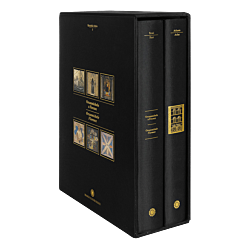
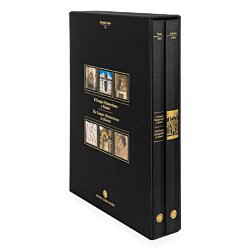
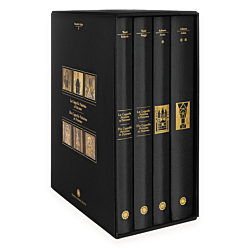
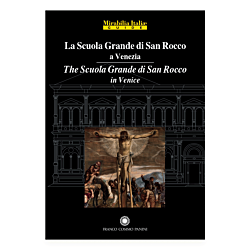
Eretto come residenza destinata allo svago e alla ricreazione dei signori della città, il Palazzo Schifanoia venne dotato sotto il governo di Borso d'Este di un grande salone di rappresentanza, il Salone dei Mesi, alla cui decorazione di rappresentanza, il Salone dei Mesi, alla cui decorazione lavorarono i grandi maestri dell'Officina ferrarese: Cosmè Tura, Francesco del Cossa ed Ercole de' Roberti. Un ciclo unico per qualità artistica e ricchezza di riferimenti alla cultura neoplatonica del tempo. All’interno della collana Mirabilia Italiae, una collana unica al mondo, che rappresenta dei veri e propri percorsi di visita dei monumenti più belli d’Italia, un’opera dedicata al Palazzo Schifanoia a Ferrara.
Erected as a residence intended for the leisure and recreation of the lords of the city, Palazzo Schifanoia was endowed under the rule of Borso d'Este with a large reception hall, the Salone dei Mesi, to the decoration of which the great masters of the Officina ferrarese worked: Cosmè Tura, Francesco del Cossa and Ercole de' Roberti. A unique cycle for its artistic quality and wealth of references to the Neoplatonic culture of the time. As part of the Mirabilia Italiae series, a unique series that presents itineraries for visiting Italy's most beautiful monuments, a work dedicated to Palazzo Schifanoia in Ferrara.
Due volumi con copertina cartonata rivestita in raso di seta nero con impressioni in oro:
Volume primo
Atlante fotografico pp.312;
303 illustrazioni a colori.
Volume secondo
Testi. Saggi e schede pp. 360;
196 illustrazioni in bianco e nero.
A cura di/Edited by Salvatore Settis e Walter Cupperi
Testi Tdi/exts by J. Bentini, M. Bertozzi, W. Cupperi, C. Di Francesco, V. Farinella, M. Folin, F. Frisoni, V. Gheroldi, M.Toffanello, R. Varese, G. Venturi
Fotografie di/Photos by A. Ghiraldini

 Alla ricerca di TutankhamunPrezzo speciale 22,80 € Prezzo predefinito 24,00 €
 Emilio Isgrò. Sillogismo del cavalloPrezzo speciale 23,75 € Prezzo predefinito 25,00 €
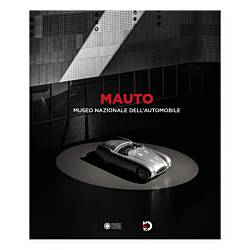 MAUTO. Museo Nazionale dell'AutomobilePrezzo speciale 33,25 € Prezzo predefinito 35,00 €